Showing posts with label Chutneys and pickles. Show all posts

Thursday, December 18, 2014

Tomato Niluva Pachadi or Sun Dried Tomato Pickle

I've wanted to prepare tomato pickle for a long time but I kept on postponing it because it is a long process. It depends on the climate, we need good sunshine to dry the tomato slices. Summer season is the best time to make this pickle and even tomatoes are less juicier in the summer. I asked my pinni (aunt) for the recipe of this pickle and followed her instructions.
Let's see how I made this pickle..


What you need:

Raw tomatoes-1 kg
Chilly powder-1/2 a cup
Salt-1/2 a cup
Garlic cloves-1/2 a cup
Tamarind pulp-1/4 a cup Turmeric powder-1 tablespoon
Fenugreek seed-1 tablespoon
Mustard seeds-1 tablespoon

For seasoning:

Curry leaves-2 twigs
Red dry chilly-6
Split bengal gram or pachi sanaga pappu-1 tablespoon
Split blaqck gram or minapa pappu-1 tablespoon
Cumin seeds-1 teaspoon
Mustard seeds-1 teaspoon
Garlic cloves-5
Oil-1 cup or more 


Preparation:
  1. Wash and wipe the tomatoes with a dry cloth. Cut them into thin slices and soak them in a glass bottle or jar or tupperware container after adding one tablespoon of turmeric powder and 1/4th cup of salt.
  2. Soak them over night and the next morning, squeeze the tomato slices and dry them under the sun on a dry cloth. Wash and deseed the tamarind and add it to the tomato juice and dry it under the sun.
  3. In the evening, store the tomato slices and juice separately in your kitchen. The next day, dry them again under the hot sun.
  4. Do like wise on the third day and now the dried tomato is ready to be pickled. Transfer half of the tomato slices and the juice and tamarind, chilly powder and 1/4 a cup of salt into a mixer jar or wet grinder. Grind it into a paste.
  5. Now add the remaining dried tomato slices and garlic cloves and grind it for a few seconds in the mixer. Do not grind into a fine paste. Dry roast the fenugreek seeds and mustard seeds and allow them to cool down. 
  6. Grind them into a fine powder and mix it with the ground paste. Heat the oil in a pan and add split bengal gram, split black gram, broken dry chilly, mustard seeds, garlic cloves, cumin seeds and curry leaves one by one. 
  7. Fry them for a minute and add the ground tomato paste to it. Cook it for 1-2 minutes on a low flame. Turn off the stove and once it's cooled down, transfer it into an air tight bottle or jar.
Enjoy the sour and spicy tomato pickle with hot rice and ghee or with dosa or chapathis.

Note: Avoid using wet spoon in the pickle to give it a long life. It can stay preserved for 5-6 months, if you take good care of it. If you add less salt, the pickle may get spoilt. So enough salt should be added. Instead of seasoning the pickle at a time, you can season it little by little whenever you want.


Monday, March 23, 2009

Vankaya Pachadi (Brinjal Chutney)


My mother in law makes yummy chutneys with fresh vegetables…One of the popular one amongst them is Vankaya Pachadi...Here goes her recipe…


What you need:

Brinjals- 3
Green chillies-5
Tamarind- a small berry sized
Curry leaves- a few
Turmeric powder-1/4 teaspoon
Salt-1 tablespoon
Coriander seeds-1 teaspoon
Garlic-2 cloves
Oil-2 tablespoons

For seasoning: 1 teaspoon of mustard and cumin seeds, 2-3 dry chilli pieces and a few curry leaves…


How to make:

Wash and cut the brinjals into small pieces and put them in salted water to prevent the changing of colour. Heat one tablespoon of oil in a pan and add the green chillies, a few curry leaves, coriander seeds, tamarind, turmeric powder and garlic. Fry them for two minutes on a medium flame. Leave them to cool and in the same pan add the brinjal pieces. Fry them until they become soft and allow them to cool. Grind the fried ingredients except the brinjal pieces into a fine paste. Now add the brinjal pieces and salt and grind it into a coarse paste. (Add the brinjal pieces in the end because they should not be grinded into a paste). Heat the oil in the same pan. Now add the dry chillies, mustard and cumin seeds and curry leaves. Once they turn brown in colour, add the ground chutney to it. Mix every thing well and turn off the stove. Serve it with hot rice or chapathis…

Tuesday, March 03, 2009

Capsicum And Tomato Chutney


What you need:

Large green Capsicum-1
Medium sized red tomatoes-2
Green chillies-4
Fresh chopped coriander
Gram dal or chana dal-1 tablespoon
Cumin seeds-1 teaspoon
Turmeric powder-a pinch
Tamarind pulp-1 teaspoon
Sugar-1 teaspoon
Salt-1 tablespoon
Oil-2 tablespoons


For seasoning: 1 teaspoon mustard seeds, 1 teaspoon cumin seeds and 1 teaspoon black gram dal (splitted urad dal).


How to make:

Wash and slice the capsicum and tomatoes into cubes. Heat 1 tablespoon of oil in a pan and add the capsicum, cut green chillies and sugar. Fry them for two minutes on a medium flame and add the cumin seeds and channa dal. Fry them for one more minute and transfer them into a bowl. Now in the same pan, add the tomato cubes and tamarind and cook it for two minutes. Allow it to cool and grind all the fried ingredients into a paste. Add fresh coriander and grind it for 1-2 seconds. Heat the remaining 1 tablespoon of oil in the pan and add the mustard seeds, cumin seeds and black gram dal and once they start spluttering, add the ground paste to it. Lower the flame and cook it for one to two minutes. Turn off the stove and serve it with dosa or hot rice.

Saturday, February 14, 2009

Curry Leaves Chutney

Happy Valentine's Day!


Can you guess what these hearts are made of???


Karivepaku pachadi (Curry Leaves Chutney)

Curry leaves have very important place in Indian cuisine especially South Indian cousine…The leaves are highly valued as seasoning in South Indian and Sri Lankan cooking, much like bay leaves and especially in curries with fish or coconut milk. In their fresh form, they have a short shelf life though they may be stored in a freezer for quite some time; however, this can result in a loss of their flavour. They are also available dried, though the aroma is much inferior.
The leaves of Murraya koenigii are also used as a
herb in Ayurvedic medicine. Their properties include much value as an antidiabetic[2], antioxidant[3], antimicrobial, anti-inflammatory, hepatoprotective, anti-hypercholesterolemic etc. For more details, please visit the following site…
http://en.wikipedia.org/wiki/Curry_Tree


This is my submission for the event Chutney Mela hosted by Ramya of http://maneadige.blogspot.com/2009/01/inviting-entries-for-mania-event-here.html


What you need:

Fresh curry leaves-a bowlful
Red dry chillies-5
Cumin seeds-1 teaspoon
Turmeric powder-a pinch
Salt-1 tablespoon
Grated jaggery-1 tablespoon
Garlic-2 cloves
Tamarind pulp-2 tablespoons
Oil-3 tablespoons

For seasoning: 1 teaspoon mustard seeds, 4-6 fenugreek seeds, 2 cloves of garlic, 2-3 dry chilli pieces and a few curry leaves…


How to make:

Wash and dry the curry leaves for 15 minutes in front of a fan. Heat the oil in a pan and add the red chillies, cumin seeds, 2 garlic cloves and a pinch of turmeric powder. Fry them until they turn light brown in colur and transfer them into a bowl. Now add the curry leaves and fry them for 1-2 minutes on a low flame. Now turn off the stove. Transfer all the fried ingredients into a mixer jar and add the jaggery, tamarind pulp and salt. Grind them into a paste using a little water if necessary. Heat the oil in the pan and add dry chilli pieces, garlic, mustard seeds and curry leaves one by one. Fry them until they turn brown in colour and add the ground paste to it. Lower the flame and cook it until the oil separates from the chutney. Turn off the stove and store it into a dry bottle, once it cools down…It keeps for two weeks, if we take proper care, such as not using a wet spoon…It goes well with hot rice, chapathis or dosas...

Tuesday, September 30, 2008

Beerakaya Pachadi

Ridge Gourd Chutney


This is my submission for the event-Food In Colors – Green at Tongue Ticklers.

Ingredients:

Ridge gourd or beerakaya-1
Green chillies-5
Cumin seeds-1teaspoon
Tamarind-small berry sized
Turmeric powder-a pinch
Garlic cloves-2
Salt-1 tablespoon
Oil-1 tablespoon

For Seasoning: Red dry chilli pieces-4, curry leaves-a few and urad dal or black gram-1 teaspoon.


Method:

1. Peel off the ridge gourd and cut it into small pieces. There is no need to peel it finely. Leave a little bit of skin as it helps to thicken the chutney and gives it a nice colour.
2. Heat the oil in a vessel and add the slitted green chillies, cumin seeds, tamarind, garlic and turmeric powder.
3. Fry them on a medium flame until they turn light brown in colour and transfer them into a bowl. Now add the ridge gourd pieces to the oil and cook them until the oil separates.
4. Transfer them into the mixer jar and add the fried ingredients and salt. Grind them into a paste.
5. Heat the oil and add the dry chillies, curry leaves and urad dal and fry for a few seconds. Add it to the ground chutney and serve it with hot rice or dosa.

Saturday, September 13, 2008

Cauliflower Pickle


This is my submission for the event-Think Spice...Think...Fenugreek, hosted by http://kittensinthekitchen.blogspot.com/2008/09/my-turn-think-spice-think-fenugreek.html


Ingredients:


Cauliflower florets-4 cups
Red dry chilli powder-5 tablespoons
Turmeric powder-1/4 teaspoon
Fenugreek seeds-1 tablespoon
Garlic cloves-6
Lime or lemon juice-4 tablespoons
Salt-4 tablespoons
Oil-1 cup


Method:

1. Wash and keep the cauliflower florets in warm salt water for two minutes.
2. Drain the water and wipe them with a dry towel and lay them on a cloth under the sun or under the fan for ten minutes to make sure they are not wet.
3. Dry roast the fenugreek seeds and grind them into a powder.
4. Gind the garlic into a coarse paste.
5. Take a big bowl and add the cauliflower florets, chilli powder, salt, fenugreek powder, turmeric powder, garlic paste, lime juice and oil to it.
6. Wipe your hands with a dry towel and mix all the ingredients thoroughly and transfer them into a clean dry bottle.
7. Cover it for one or two days and mix it again.
8. Serve it with hot rice or chapathis. This pickle keeps for two weeks.


Thursday, May 01, 2008

Palli Pachadi (Ground Nut Chutney)


Ingredients:

Roasted and peeled groundnuts (peanuts)-1 cup
Green chillies-4
Coriander seeds-1 teaspoon
Cumin seeds-1teaspoon
Tamarind-small berry sized
Turmeric powder-a pinch
Garlic cloves-2
Salt-1 tablespoon

For seasoning:
Dry chilli-1 (break into pieces)
Cumin seeds-1/2 a teaspoon
Mustard seeds-1/2 a teaspoon
Urad dal-1/2 a reaspoon
Gram dal-p1/2 a teaspoon
Curry leaves-a few
Oil-1 tablespoon


Method:

1. Heat the oil in a pan and fry the green chillies until they turn light brown in colour on a low flame.
2. Add cumin seeds and coriander seeds and fry for one minute.
3. Add the tamarind and garlic cloves and fry for a few seconds.
4. Turn off the stove and let the fried ingredients cool.
5. Grind them into a thick paste by adding the salt and sufficient water.
6. Heat the remaining oil in the same pan and add all the seasoning ingredients. Fry them for a few seconds add this to the ground chutney.
7. Mix well and serve it with ravva idly, dosa or vada.
8. If you make this chutney using dry chillies instead of green chillies, it goes well with plain rice. Make sure that you use less water for grinding in comparision to the chutney that we make with green chillies.


Ravva Idly...

Dosa...


Note: Don’t forget to slit the green chillies before frying them in the oil to prevent popping.

Monday, April 07, 2008

Ugadi Subhakankshalu


Happy New Year to Kannadigans, Maharastrians and Sindhis too!

The
Telugu people celebrate the festival with great fanfare; gatherings of the extended family and a sumptuous feast are de rigueur. The day, however, begins with ritual showers (oil bath) followed by prayers, and then the eating of a specific mixture of -
Neem Buds/Flowers for Bitter
Raw Mango for Tangy
Tamarind Juice for Sour
Green Chilli for Hot
Jaggery for Sweet
Pinch of Salt for Salt
This mixture with all six tastes, called "Ugadi Pachhadi" in
Telugu symbolizes the fact that life is a mixture of different experiences (sadness, happiness, anger, fear, disgust, surprise), which should be accepted together and with equanimity. Later, people traditionally gather to listen to the recitation of the religious almanac (Panchangam) of the coming year, and to the general forecast of the year to come. Ugadi celebrations are marked by literary discussions, poetry recitations and recognition of authors of literary works through awards and cultural programs.
For more details, please visit the following web site:
http://en.wikipedia.org/wiki/Ugadi


Ugadi Pachadi


Ingredients:

Raw mango-1
Neem flowers-1 tablespoon
Tamarind pulp-1 teaspoon
Salt-a pinch
Red chilli powder-a pinch
Grated jaggery-1 teaspoon


Method:

1. Wash the mango and cut it into small pieces.
2. Wash the neem flowers carefully and keep it aside.
3. Chop the chilli into small pieces.
4. Take a big bowl and add the mango pieces, neem flowers, chilli powder, tamarind pulp, salt and jaggery.
5. Mix well. Now the ugadi pachadi is ready…

Sunday, March 30, 2008

Raw Tomato Chutney


Ingredients:

Raw tomatoes-3
Green chillies-5
Coriander seeds-1 teaspoon
Cumin seeds-1teaspoon
Tamarind-small berry sized
Turmeric powder-a pinch
Garlic cloves-2
Salt-1 tablespoon
Oil-1 tablespoons

Method:

  1. Wash and cut the tomatoes into small pieces.
  2. Heat the oil in a pan and add the slitted green chillies, coriander seeds, cumin seeds and fry them until they turn light brown in colour.
  3. Add the turmeric powder and garlic and fry them for a few more seconds.
  4. Transfer the fried ingredients into a bowl and add the chopped tomatoes.
  5. Cook until the oil separates and add tamarind.
  6. Fry for a few seconds and turn off the stove.
  7. Let them cool and transfer all the fried ingredients into a mixer jar.
  8. Add salt and grind into a coarse paste by using little water if necessary.
  9. If you use mortar and pestle to grind the chutney, the chutney will tastes nicer.
  10. Serve with hot rice or kichidi or dosa.

Wednesday, March 19, 2008

Gongura Pachadi

Ingredients:

Fresh gongura-1 bunch
Red dry chillies-10
Coriander seeds-1 teaspoonful
Fenugreek seeds-1 teaspoon
Tamarind-small berry sized
Turmeric powder-a pinch
Garlic cloves-4 (can be replace with a pinch of hing powder)
Salt-2 tablespoons
Oil-5 tablespoons

For Seasoning: ¼ teaspoon mustard seeds, 3-4 pieces of dry chillies, ¼ teaspoon gram dal, ¼ teaspoon urad dal, garlic-2 cloves and few curry leaves.

Method:

  1. Pluck the gongura leaves and wash them thoroughly.
  2. Heat one tablespoon of oil in a pan and add the dry chillies, turmeric powder, fenugreek seeds and coriander seeds.
  3. Fry until they turn light brown in colour and add garlic (4) and tamarind .
  4. Fry for one more minute and turn off the stove.
  5. Transfer them into the mixer jar and in the same pan add the gongura leaves.
  6. Fry on a medium flame until the water evaporates.
  7. Let them cool and transfer them to the jar.
  8. Grind all the fried ingredients along with the gongura leaves and salt using a little water.
  9. Heat the remaining oil in the pan and add the dry chilli pieces, garlic cloves (2) , gram dal, urad dal, mustard seeds and curry leaves.
  10. After they turn brown, add the ground pickle and cook on low flame until the oil separates. Serve with hot rice, ghee and mudda pappu…

Note: This pickle keeps for two weeks, if we store it in a dry jar and do not use a wet spoon.

Thursday, December 27, 2007

Grated Mango Pickle (Instant)


Ingredients:

Grated raw mango (Sour)-1 cup
Red chilly powder-2 tablespoons
Salt-2 tablespoons
Sugar-1 teaspoon
Crushed garlic-1 tablespoon
Fenugreek powder-1 teaspoon
Turmeric powder-a pinch
Oil-4 tablespoons

For Seasoning: ¼ teaspoon mustard seeds, ¼ teaspoon cumin seeds, ¼ teaspoon gram dal, ¼ teaspoon urad dal and few curry leaves.

Method:

  1. Dry roast the fenugreek seeds and allow them to cool. Later grind into a fine powder and keep aside.
  2. Heat the oil in a pan and add the seasoning ingredients and let them splutter.
  3. Add the grated mango and turmeric powder. Cook on low flame until oil separates from it.
  4. Add the crushed garlic, sugar, fenugreek powder, chilly powder and salt. Cook for two more minutes and turn off the stove.
  5. After cooling, store it in a dry jar. Tastes nice after one day and keeps for ten days, if we don’t use a wet spoon. Goes well with plain rice or dosa.


Wednesday, November 28, 2007

Mullangi Pachadi

Mullangi Pachadi or Radish Chutney


Ingredients:


Cubed Radish-1 cup
Roasted peanuts-4 tablespoons
Green chillies-5
Cumin seeds-1 teaspoon
Lemon juice-4 tablespoons
Turmeric powder-a pinch
Curry leaves-few
Garlic-3 cloves
Salt to taste
Oil-1 tablespoon

Method:

1. Heat the oil in a pan and fry the green chillies, curry leaves, turmeric powder, cumin seeds and garlic (in the end) on low flame.

2. Keep them aside and fry the cubed radish for four minutes on low flame.

3. Turn off the stove and let them cool.

4. Add peanuts, salt and lime juice and grind into a smooth paste. If necessary use a little water.

5. Serve with hot rice and ghee. It was yummy…even my children liked it.


Note: If you want, you can season the chutney with mustard seeds and red dry chillies.

Sunday, November 18, 2007

Pesarattu-Upma with Ginger Chutney and Ginger Tea

Ginger, the underground stem, or rhizome, of the plant Zingiber officinale has been used as a medicine in Asian, Indian, and Arabic herbal traditions since ancient times. Ginger is used in a lot of dishes because of its medicinal value. Too much ginger can cause heartburns.


Ginger Chutney with Green Chillies

This is my submission for Think Spice-Ginger hosted by Sunita of http://sunitabhuyan.blogspot.com/


Pesarattu-Upma


Upma

Ingredients :


Sooji or bombai ravva-1 cup
Chopped onion-1
Chopped green chillies-2
Ginger-small piece
Dry red chilly-1
Curry leaves-few
For seasoning : Gram dal-1/4 tesson, urad dal ;-1/4 teaspoon, Cumin seeds-1/4 teaspoon, Mustard seeds-1/4 teaspoon and Salt to taste
Oiil-2 tablespoons

Method :

1. Heat the oil in a pan and add the red dry chilly pieces, gram dal, urad dal, mustard seeds, cumin seeds and let them splutter.

2. Add the chopped pieces of ginger, green chilli and chopped onion and fry them until they become soft.

3. Add 3 cups of water and salt and boil it on medium flame.

4. Lower the flame and add the ravva with continuous stirring. If the ravva is dry roasted for three to four minutes, the upma tastes very nice.

5. Cook it for five minutes and turn off the stove.


Pesarattu


Ingredients :

Green grams or pesalu-2 cups
Fenugreek seeds or menthulu-1/4 teaspoon
Rice-1/4 cup
Ginger-1 inch piece
Cumin seeds or jeera-1 teaspoon
Salt to taste
Oil-4 tablespoons

Method:


1. Soak the green grams overnight along with the rice and fenugreek seeds.

2. Wash and grind them with cumin seeds, salt, water and ginger into dosa batter consistency.

3. Heat a non stick pan and pour the batter with a laddle and spread it into a circle.

4. Add one teaspoon of oil at the edges of the circle. Let it cook on medium flame.

5. Flip it over and add a laddle of upma and fold it. Serve on a plate. If you do not want to add upma, you can add chopped onions green chillies and fold the pesarattu.


Ginger Chutney


Ingredients :

Ginger-50 grams
Green chillies-5
Grated jaggery-2 spoons
Tamarind-small berry sized
Turmeric powder-a pinch
Jeera-1 teaspoon
Garlic cloves-2
Oil-2 tablespoons
For Seasoning : ¼ teaspoon gram dal, ¼ teaspoon urad dal, ¼ teaspoon mustard seeds, few curry leaves and 4pieces of red dry chilly

Method:

1. Heat the oil in a pan and fry the green chilli, turmeric powder and cumin seeds on low flame.

2. Before turning off the stove add the tamarind and garlic cloves and fry them for one minute.

3. Peel off the ginger and cut it into small pieces and fry until they turn brown. Grind all the fried ingredients along with the salt and jaggery.

4. In the same pan, heat the remaining oil and fry the red dry chilly pieces, gram dal, urad dal, mustard seeds and curry leaves.

5. Turn off the stove and add it to the grinded chutney. It will keep for 4-5 days.


Ginger Tea


Ingredients :

Milk- ¾ cup
Water-1/4 cup
Red Lable tea powder or any other brand-1 tablespoon
Sugar-1 tablespoon
Ginger-1 inch piece

Method:

1. Heat the milk and water in a vessel on medium flame and add the tea powder.

2. After boiling for three minutes add the crushed ginger and lower the flame.

3. Add sugar and let it boil for three more minutes.

4. Turn off the stove and filter the tea into a cup using the filter.

5. Drink it hot.

Thursday, November 15, 2007

Kandi Pachadi

Toor Dal Chutney


This is my submission for JFI-Toor dal hosted by Linda of http://outofthegarden.wordpress.com

My grand mother used to make this pachadi when we went to our village in my childhood. She used to grind it in a mortar with a club. That tasted very nice. I made this chutney in mixer. We love to eat this pachadi.


Ingredients :

Kandi pappu or Toor dal-1/4 cup
Dry red chillies-4
Cumin seeds or jeera-1 tea spoon
Tamarind-small berry sized
Turmeric powder-a pinch
Oil-1 tablespoon
Garlic cloves-3
Salt to taste


Method :

1.Heat the oil in a pan and fry the dry chillies for two minutes on low flame.

2. Add the turmeric powder, cumin seeds, garlic cloves and tamarind and fry for one minute.

3. Transfer them into a bowl and fry the toor dal till a nice aroma spreads throughout the kitchen.

4. Turn off the stove and allow it to cool. Grind all the ingredients into a paste by adding sufficient water and salt.

5. Serve with hot rice and ghee.

Sunday, September 23, 2007

Wood Apple or Elephant Apple Chutney

Velagapandu Pachchadi in Telugu


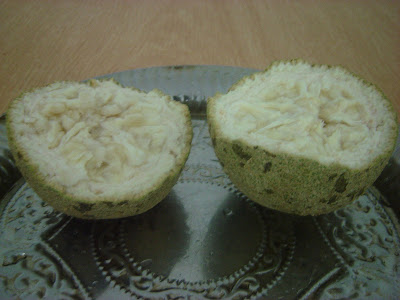
The wood-apple, it may be called elephant apple, monkey fruit, curd fruit, kath bel and other dialectal names in India. It is a favorite fruit to elephants as well as to Lord Vinayaka and has medicinal value. The fruit is round to oval, with a hard, woody, grayish-white, scurfy rind. The pulp is brown, mealy, odorous, resinous, astringent, acid or sweetish, with numerous small, white seeds scattered through it. The rind must be cracked with a hammer. The scooped-out pulp, though sticky, is eaten raw with or without sugar, or is blended with coconut milk and palm-sugar syrup and drunk as a beverage, or frozen as an ice cream. It is also used in chutneys and for making jelly and jam. The jelly is purple and much like that made from black currants. There are 2 forms, one with large, sweetish fruits; one with small, acid fruits. For more details, visit the following site:


http://www.hort.purdue.edu/newcrop/morton/wood-apple.html


Ingredients:

Wood apple-1
Green chillies-5
Grated jaggery-1 tablespoon
Cumin seeds-1 teaspoon
Salt-1 tablespoon
Turmeric powder- a pinch
Curry leaves-few
Oil for seasoning-1 teaspoon
Seasoning ingredients-1 teaspoon (urad dal, mustard seeds, cumin seeds, channa dal, fenugreek seeds and dry red chilli pieces).


Method:


1. Wash and break the wood apple using a hammer and takeout the pulp.

2. Grind the pulp along with jaggery, cumin seeds, turmeric powder, salt and green chillies into thick paste.

3. Keep a pan on the stove and heat the oil and add the curry leaves and seasoning ingredients.

4. Add the paste to the seasoning and let it cook for two minutes on low flame.

5. Serve with hot rice and ghee.

Note:
Wood apple has its own unique taste (e.g. bitter guard) and not everyone might like it.

Friday, September 14, 2007

Indian Gooseberry Pickle

Indian gooseberries are enriched with vitamin-C. In India, we get them in the winter season. My mother makes this pickle in a different way. She first deep fries the berries and then mixes them with all the ingredients. I have made it with a little change and want to share with you.

Amla or Indian Gooseberry Pickle
Usirikaya Pachchadi or Nellikai Pickle


Thi is my entry for RCI Karnataka hosted by Asha of Foodies Hope.


Ingredients:

Indian gooseberries-10-12 (cut into pieces and remove the seeds)
Chilli powder-1 cup
Salt -¾ cup
Turmeric powder-1 tablespoon
Fenugreek seeds-2 tablespoons
Mustard seeds-2 tablespoons
Garlic paste-3 tablespoons
Lime juice-1/2 cup
Oil-2 cups


Method:

1. Wipe the cut gooseberries with a dry towel and keep them aside in a bowl.

2. Dry roast the fenugreek seeds and mustard seeds and powder them.

3. Add turmeric powder, chilli powder, salt, garlic paste, and fenugreek and mustard powder to the gooseberry pieces.

4. Now add the lime juice and oil and mix well. Store it in a dry jar.

5. It lasts for one month and goes well with rice, dosa and chapathis.

Note: Make sure that your hands are not wet while making the pickle.